Why European Subtitles Can Be Cringeworthy
Filed under: Editor at Large — Casey at 8:02 AM on 7 August 2008

Guy La Roche at A Fistful of Euros is a career subtitler. I have subtitled a few indie movies, but most of the subtitling work in Europe is on English-language films. As a native English speaker and translator, that leaves me out.

La Roche has a great explanation of why the subtitles on a film may not be equal to the dialogue:

First of all, people process spoken information faster than written information. Subtitles follow the pace of spoken language. The amount of text used in subtitles therefore needs to be reduced so that the reading speed matches the speed of the dialogue. The faster a character speaks, the more the translator needs to reduce his text. Most of the time it is simply impossible to do a word for word translation. You, the people who watch tv and movies, simply cannot read fast enough. It is your fault, not the subtitler’s.

But I’m a fast reader, you say.

It doesn’t matter.

According to a Belgian study years ago the average television viewer’s literacy level was estimated, if I remember correctly, to be that of a… fourteen year old!

If that Belgian study was years ago, and some teenagers prefer reading on the Internet to reading books, will subtitles have to change too?

Fiancé, Fiancée: How Do You Pronounce Them?
Filed under: Editor at Large, Spoken English, Written English — Casey at 12:07 PM on 5 August 2008

My friends have fallen prey to an engagement epidemic. And when you’re the first to know, you want to tell everyone else you know, too.

But spreading the news that your two best buds are affianced can be tricky.

You can look up both spellings to make sure you get the mass mailing right. I was stymied, however, when it came to regular, real-time conversation.

Different on Paper, Same in Speech

If your engaged guy friend is a fiancé, and your engaged girl friend is a fiancée, wouldn’t you expect to preserve that difference when talking to people? At the very least, it would help your grandfather understand exactly what’s going on with your best friend Lindsay Lohan:

Her fiancé’s name is Sam Ronson, you say? Well isn’t that nice, dear.”

Get your grandfather an e-mail address, because without some serious pronoun work on your part, he would understand more by reading about the engagement than he would by hearing it in conversation.

While there are three acceptable American English pronunciations for these French terms, the word sounds exactly the same whether it’s fiancé or fiancée.

So How Do I Say It?

For the record, Webster’s offers a male voice intoning fee-ahn-SAY as the proper pronunciation for fiancé and fiancée. I prefer fee-AHN-say, which Bartleby also deems acceptable.

You’ll just have to use context to get the word out to your friends. That, or cue cards.

Hello Again
Filed under: Editor at Large — Casey at 11:16 AM on 4 August 2008

The Belletra blog has been on hiatus. I was translating a very large project that was followed immediately by a vacation and Internet fast.

Photobucket

Photo by Kim Baird

The project is now published, and I am returning to blogging forthwith!

Thanks for your support.

Translation Lesson: Sometimes an Enabling Act is just an Enabling Act
Filed under: Editor at Large, German Translation, Policy, Politics, Written English — Casey at 10:54 AM on 11 June 2008

Even when it seems like the silliest term you’ve ever heard.

The Enabling Act (Ermächtigungsgesetz in German) was passed by the Reichstag (Germany’s parliament) on March 23, 1933 and signed by President Paul von Hindenburg the same day. It was the second major step, after the Reichstag Fire Decree through which Adolf Hitler obtained plenary powers using legal means. The Act granted the Cabinet of Germany the authority to enact laws without the participation of the Reichstag for four years.

And I thought this choice was far too simple to be the right one…good thing I made it anyway.

How Do You Keep Your Eyes Wide Shut?
Filed under: Editor at Large, Spoken English, Written English — Casey at 12:33 PM on 9 June 2008

I’m working on a very large and very urgent translation project this month. While being so busy has its drawbacks for updates, the job I’m doing does provide a lot of inspiration for posts.

For example, I could swear that the only time I’ve ever heard the expression “eyes wide shut” was in reference to the Kubrick film. Yet I had a hunch that it would be the perfect translation for a German expression I came across in my work today.

But how could I find a definition when the Google results are crammed so full of Cruise-Kidman speculation and middling movie reviews? I ended up searching for

“eyes wide shut” definition -kubrick -film

This still didn’t generate any of the obvious, easy reference sites that I can usually count on finding in the search results.

It turned out, however, that the context was enough. Look at the titles on these results, and you can probably guess the meaning of the phrase already:

Internet, you are a translator’s best friend.

Even when that translator has to work a little harder to make you useful.

A Victory For Logophiles
Filed under: Editor at Large — Casey at 4:45 PM on 22 May 2008

The word nerd wins American Idol!

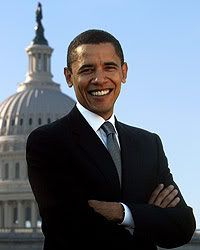
The Obamas: When Grammar Gets Political
Filed under: Editor at Large, Politics, Spoken English — Casey at 5:18 PM on 14 May 2008

Obama pulled ahead of Hillary Clinton in the superdelegate count two days ago, and is poised to bag a major endorsement this evening in the U.S.

So when Edwards takes the podium after I’m fast asleep in Berlin, take a moment to consider Obama’s latest grammar mistake, memorably noted by Radio Free Mike.

The senator from Illinois distanced himself once and for all from the Reverend Jeremiah Wright during a press conference, with an even-tempered and eloquent kiss-off. However:

…he was somebody who was my pastor, and married Michelle and I, and baptized my children…

Ahem. That would be Michelle and me, wouldn’t it?

It’s not the first time that Obama has mixed up his pronouns. He seems to have a penchant for this particular error, one his wife, Michelle, has also made.

Michelle, on the other hand, has also done exactly the opposite:

Let me tell you who me and Barack are…

There is a telling difference between the mistakes being made here. While both of the Obamas made the same “for I” mistake, when talking about Reverend Wright, only Michelle made reference to “me and Barack” in a subject context and only then when refuting accusations of elitism.

If ever there was a mistake made by grammar elitists, the “for I” mix-up is it. Using a subject pronoun (”I”) when the context calls for an object pronoun (”me”) is over-correction, the result of hundreds of well-meaning grade-school teachers and bifocaled aunties reminding you that it’s not “me and Susie went to the bathroom” but “Susie and I.”

It’s interesting, then, that Michelle seemed to be aware of this class distinction in her own speech, saying moments later that she is the product of “a working-class upbringin[g].”

Obama, on the other hand, gets caught in the grammar mistakes of the elite. But what else is there, really, to ding him for? The man’s an outrageously eloquent speaker. Take a look at what else came out of his mouth at the press conference on the Wright debacle:

What particularly angered me was his suggestion somehow that my previous denunciation of his remarks was somehow political posturing.

I gave an audible “wow” when YouTube-sized Obama spoke these words to me. When you get rid of the repetition, this is an impressively wordy statement to make off the cuff during a press conference.

Indeed, is it too impressive? Should Barack take a page from Michelle? I got laughed at in junior-high detention when I said I didn’t know the “procedure”. Hillary trounced Obama among working-class West Virginia voters yesterday—who can guess what the electorate will make of him and his verbosity in November?

Raise Your Hand If You Hate Emoticons
Filed under: Booklist, Editor at Large, Written English — Casey at 1:27 PM on 7 May 2008

Emoticons: to use or not to use?

I often think there should exist a special typographical sign for a smile– some sort of concave mark, a supine round bracket, which I would now like to trace in reply to your question.

Vladimir Nabokov, 1969

Emoticons, those smiling/frowning/Homer Simpson faces that come out of the punctuation marks on your keyboard, are a different sort of written communication. They can add warmth to a chilly business e-mail, or liven up a chat in a more dignified fashion than that abominable LOL.

Digression
However much I disapprove of out-loud LOLs and OMGs, I did always love how ROTFLMAO reverberated in my brain after I would read it on screen. Something about it reminds me of Animal from the Muppets:


ROTFLMAO! ROTFLMAO!

Emoticons and Impropriety
Just like this blog, emoticons tread a fine line between informality and professionalism. They give you more power over how your words will be interpreted. But when is it appropriate to insert one into electronic communication? Is their use ever required? What do they say about the writer? It’s been over ten years since e-mail came into common use: are there any hard-and-fast rules on when it’s okay to put a smiley face on that “nice to meet you?”

SEND, a 2007 book on e-mail by two publishing veterans, has some great suggestions. At the time of publication, the New Yorker even said they had “put themselves forward as the genre’s Strunk and White” (and you know how I feel about Strunk and White).

For David Shipley, deputy editorial page editor and Op-Ed page editor of The New York Times, and Will Schwalbe, former editor-in-chief of Hyperion Books, clarity goes hand-in-hand with e-mail etiquette.

If you don’t consciously insert tone into an email, a kind of universal default tone won’t automatically be conveyed. Instead, the message written without regard to tone becomes a blank screen onto which the reader projects his own fears, prejudices, and anxieties.

Ergo, emoticons.

How Far Should You Emote?
Sometimes that insertion of tone is awkward, especially if it implies that your own words aren’t good enough to communicate your meaning. I agree with Shipley and Schwalbe, however, that a little awkwardness can be necessary. It’s certainly preferable to offending or otherwise alienating your reader. Indeed, after reading that Talk of the Town piece on their book, I started using far more exclamation points in my own e-mails, as they recommend, to illustrate enthusiasm for a project or emphasize my receptiveness to new ideas.

But I stopped short of using a Homer Simpson face ( ~(_8^(|) to soften up my blunders. Although Shipley and Schwalbe rubber-stamp their use, I am still chary with emoticons. You never know what your addressee might think.

When my boyfriend and I first courted over e-mail, I sent him long and literary letters lacking any parenthetical faces. Could I have been trying to keep him on his toes during those uncertain months of long distance? Or were we just doing our best to inject some old-fashioned epistolary romance into an electronic age?

Perhaps I just guessed early what I learned today: he hates emoticons.

Fielding Media Inquiries
Filed under: Editor at Large, Policy, Politics, Subject-Specific — Casey at 1:10 PM on 28 April 2008

This is why today’s entry is so short.

Forgo or Forego?
Filed under: Editor at Large — Casey at 12:37 PM on 25 April 2008

I had what the Spanish call a “lapsus” today (no, not a lapsus freudiano) and completely forgot how to spell a certain word.

I was writing an e-mail to my grandmother, meaning to tell her that I would gladly give up hypothetical thing A for hypothetical thing B. Though I chose the right word, I could not remember how to spell it:
I’m happy to forgo the trip…?
I’m happy to forego the trip…?

Even though it’s my job to correct other people’s English mistakes, I still get uncertain when I write. I’ve said before that the one word I’m always unsure of is misspelling itself—are there two esses or three? In the case above, I didn’t know the etymology of the word. Because I did not know what that first fore was, um, for, I could not be sure of how to spell it. Spellcheck doesn’t help with this one: both “forgo” and “forego” are real English words. But only one means to go without, as I meant to say in my letter. The trouble is that in English you can understand the meaning of a word without explicit knowledge of its component parts, just as in German.

Strangely enough, I’m completely sure how to spell a similar word, one in which the prefix is much more obvious: the foregoing, or what went before. Forethought, forehead, forecast…you can see that Old English fore- hard at work to change the meaning of these words to something primary, something first.

But what about forever, forlorn, forsaken? What’s that for- doing in these words? More importantly, what exactly does it mean? I decided to go with dictionary.com today, a service which borrows heavily from the Random House Unabridged Dictionary:

for-

a prefix meaning “away,” “off,” “to the uttermost,” “extremely,” “wrongly,” or imparting a negative or privative force, occurring in verbs and nouns formed from verbs of Old or Middle English origin, many of which are now obsolete or archaic: forbid; forbear; forswear; forbearance.

[Origin: ME, OE; cf. G ver-, Gk peri-, L per-]

Not exactly a mnemonic, is it? This is tricky stuff: if you Ask Oxford about forego, the next web page you see will offer two links: one for forego and one for forgo. Maybe I’m not the only one who’s had trouble making the distinction.

But no more! From now, as long as I remember that both words exist as legitimate spellings in the English language, I’ve got a foolproof way to tell which one means to go without:

process of elimination.

Occam’s razor. Were you expecting the OED?

 
Fore goes with before. Which means that forego implies something preceding: something that goes before.

I think we can forgo any further explanation. Don’t you?

Next Page »